

Is Limescale in Drinking Water Dangerous? Facts About Hard Water Mineral Deposits
Meta Description: Wondering if limescale in your kettle, pipes, or fixtures is harmful? Learn what limescale is, why it forms, its health impact, and how to prevent or remove it.
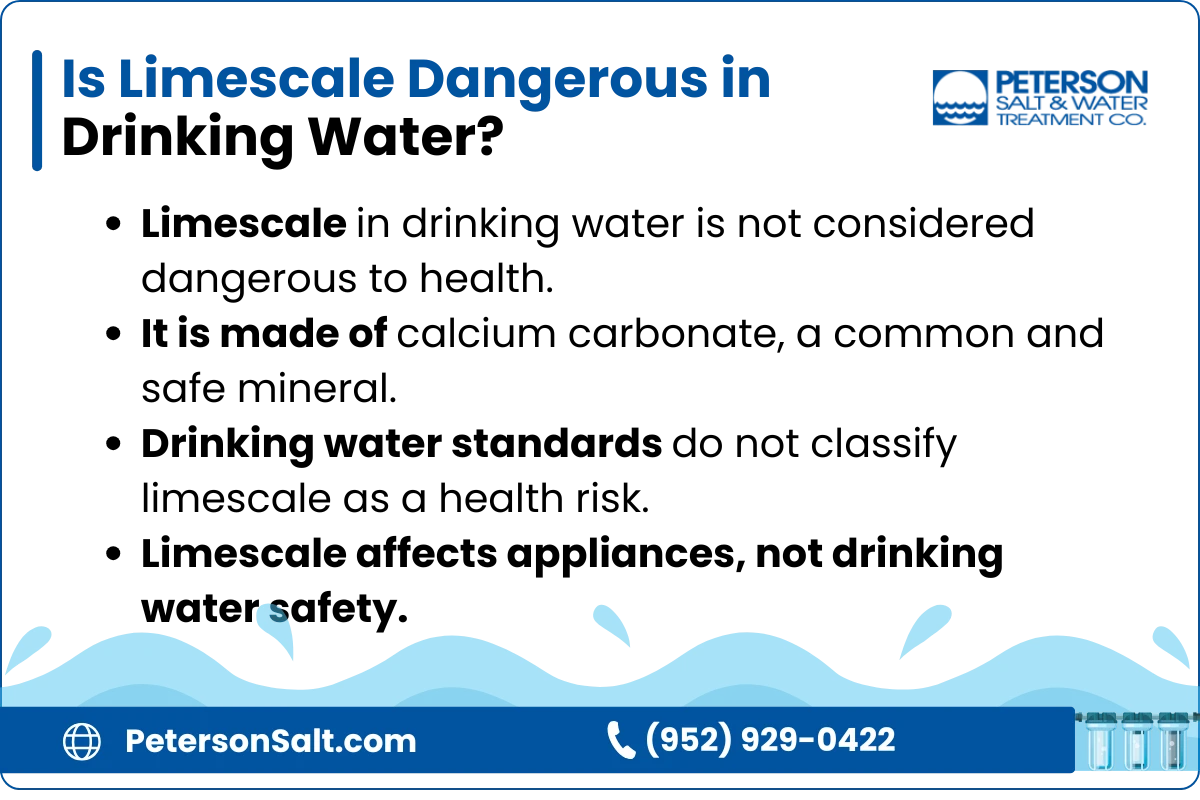
White deposits in kettles, cloudy water, or chalky buildup on taps often trigger a common question: is limescale in drinking water harmful? The good news is that limescale itself is not considered dangerous.
Limescale forms naturally from calcium and magnesium minerals already present in your drinking water. It is a mineral deposit, not a contaminant or pollutant introduced from outside.
While visible scale can be unsightly, it does not indicate that your water is unsafe to drink. Understanding what limescale is, why it forms, and its health impact can help homeowners manage it confidently.
What Is Limescale and Why Does It Form?
Limescale appears when mineral-rich water is heated or evaporates. In cold water, calcium and magnesium remain dissolved, but heat or pressure changes cause minerals to separate and settle as solid deposits.
Limescale as a Mineral Deposit
-
Made primarily of calcium carbonate, naturally found in limestone and chalk.
-
Used in food products and dietary supplements, meaning it’s safe for human consumption in small amounts.
-
Not caused by pollution, chemical treatment, or industrial waste.
Connection Between Limescale and Hard Water
-
Hard water contains higher levels of calcium and magnesium.
-
Hard water areas are more likely to see limescale on kettles, heating elements, fixtures, and inside plumbing.
-
Limescale reflects mineral content, not water safety.
Is Limescale in Drinking Water Harmful?
From a health perspective, limescale is not considered dangerous.
Calcium and Magnesium in Water
-
Essential minerals that support bone health, muscle function, and heart health.
-
Drinking water contributes a small portion of daily intake, especially in hard water areas.
Calcium Carbonate Safety
-
Commonly used in food processing and supplements.
-
Small amounts that dissolve from limescale do not pose a health risk for healthy individuals.
Drinking Water Standards
-
Guidelines focus on harmful substances like bacteria, toxic metals, and chemical pollutants.
-
Limescale is not classified as a contaminant.
-
Very hard water may affect appliances but is safe to drink.
Limescale in Kettles and Appliances: Is It Dangerous?
Kettles and boilers are often where limescale first becomes noticeable.
-
Small flakes may occasionally enter water.
-
These are just mineral particles, not toxins.
-
Boiling water does not make limescale harmful—heating only causes minerals to precipitate out of water.
How Limescale Appears in Water and Appliances
Recognizing limescale helps distinguish it from actual water quality issues.
-
White residue and chalky buildup: Found on fixtures, heating elements, and inside appliances.
-
Cloudy water or flakes: Temporary cloudiness or small white particles from heating are harmless.
Does Limescale Affect Taste?
-
Mineral taste: Hard water may taste slightly “chalky” or mineral-rich, especially in hot drinks.
-
Taste vs safety: A mineral taste does not mean water is unsafe. Safety is determined by measurable contaminants.
How to Remove or Reduce Limescale
While limescale is safe to drink, many homeowners choose to manage it for comfort, appearance, and appliance efficiency.
Descaling Kettles and Fixtures
-
Regular descaling removes buildup from kettles, coffee makers, and faucets.
-
Improves appliance efficiency and longevity but does not affect water safety.
Filtration vs Water Softeners
-
Standard filters improve taste but do not remove hardness minerals.
-
Water softeners reduce calcium and magnesium before scale forms, preventing buildup in plumbing and appliances.
Long-Term Prevention
-
Treat hard water at the point of entry to minimize scale in pipes and systems.
-
Routine appliance cleaning and occasional water testing help maintain quality and prevent excessive deposits.
Limescale vs Contamination
Understanding the difference helps avoid unnecessary worry:
-
Limescale: Mineral deposits from calcium and magnesium already present in water.
-
Contamination: Harmful bacteria, chemicals, or toxic metals. Limescale alone does not indicate unsafe water.
When to test water: Only if you notice unusual odors, colors, or tastes unrelated to mineral content.
Final Thoughts
Limescale in drinking water is not dangerous for healthy individuals. It reflects natural mineral content and water hardness, not contamination. While it can affect appliance performance and appearance, it poses no known health risk.
Managing limescale is mostly about comfort, taste, and appliance longevity, while water safety focuses on removing harmful contaminants.