

Many homeowners worry that a water softener is constantly wasting water. That concern usually comes from not knowing when discharge actually happens or how much water is involved. A softener does release water, but only during regeneration, and the amount is controlled, predictable, and directly tied to how the system works and how your household uses water.
Once you understand what regeneration is, how often it occurs, and what affects discharge volume, the numbers make sense. This guide explains those details clearly so you can judge efficiency, cost, and impact with confidence.
How Much Water Does a Water Softener Discharge Per Regeneration
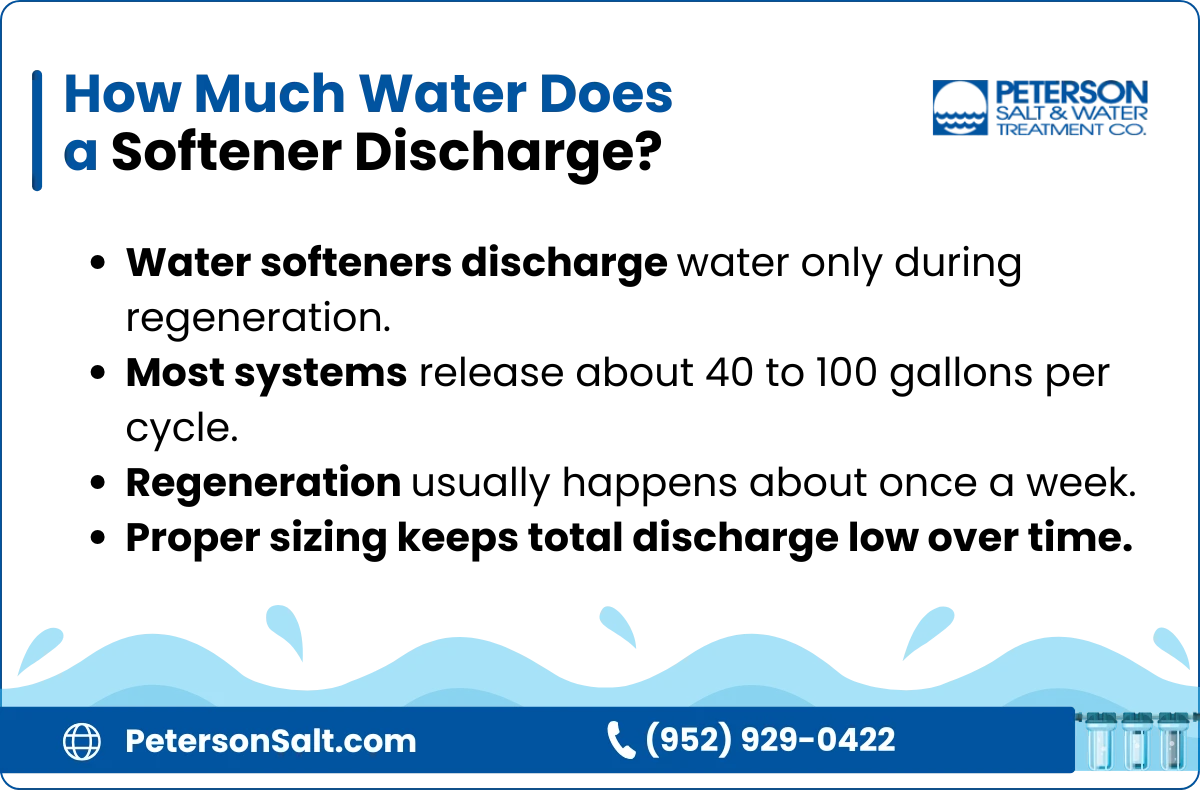
A water softener discharges water only during regeneration, and the amount used in a single cycle depends on system size, efficiency, and water hardness. Understanding the per-cycle discharge helps explain why total water use varies from one home to another.
Most residential systems discharge roughly 40 to 100 gallons during regeneration. Smaller, high-efficiency units often fall toward the lower end of that range, while older or oversized systems may use more. Outside of regeneration, a properly operating softener does not send water to the drain.
How the Water Softener Regeneration Cycle Creates Discharge
Water discharge does not happen all at once. It occurs in controlled stages during regeneration, with each stage playing a specific role in cleaning and recharging the resin bed that softens your water.
Backwash Stage
The cycle begins with backwashing, where water flows upward through the resin bed to flush out accumulated calcium, magnesium, and debris. This stage produces the strongest drain flow and accounts for much of the total discharge.
Brine Draw and Slow Rinse
After backwash, the system draws brine from the salt tank and moves it through the resin to restore softening capacity. Discharge continues during this phase, followed by a slow rinse that removes excess salt and loosened minerals.
Final Rinse and Return to Service
A final rinse clears remaining brine and prepares the system to resume normal operation. Once this step is complete, discharge stops entirely and the softener returns to service mode.
How Often a Water Softener Discharges Water
Discharge frequency depends on how often the softener regenerates, not on daily water use. Some systems regenerate only when capacity is nearly exhausted, while others follow a fixed schedule regardless of actual demand.
In many homes, regeneration occurs about once every seven days. Systems that regenerate more often will discharge more water over time, even if each cycle is smaller.
Total Water Softener Discharge Per Month and Per Year
Looking at discharge over longer periods provides better context than focusing on a single regeneration cycle. Monthly and yearly totals show whether a system is operating efficiently or regenerating more frequently than necessary.
For example, a system that discharges about 60 gallons per regeneration and runs once per week will release roughly 240 gallons per month, or about 3,000 gallons per year. Compared to total household water use, this is usually a modest percentage.
What Determines How Much Water a Softener Discharges
Several system and water quality factors influence how much water is sent to the drain. These factors explain why two homes with similar softeners can experience very different discharge volumes.
Water Hardness Level
Harder water fills resin capacity more quickly, which leads to more frequent regeneration and higher total discharge over time.
Softener Size and Resin Capacity
An undersized softener regenerates more often than needed. Proper resin capacity allows longer intervals between cycles and reduces overall discharge.
Metered vs Timer-Based Regeneration
Metered systems regenerate based on actual water use, while timer-based systems regenerate on a fixed schedule. This difference has a significant impact on total discharge.
System Age and Efficiency
Older systems rely on fixed cycle lengths and flow rates. Newer high-efficiency units adjust regeneration more precisely based on demand.
Programming and Reserve Settings
Incorrect hardness input or reserve settings can cause unnecessary regeneration and excess discharge.
Where Water Softener Discharge Water Should Go
Discharge water must be routed to an approved location to protect plumbing systems and comply with local code requirements. The correct destination depends on how the home handles wastewater.
Sewer Line Discharge
Most residential softeners discharge into a sewer line. This method is widely accepted when installed properly and includes a required air gap to prevent backflow.
Septic System Discharge Considerations
Many septic systems can handle softener discharge, but tank size, soil conditions, and local regulations matter. Excessive regeneration can place added stress on septic systems.
Drain Line Air Gap and Plumbing Code Requirements
Air gaps prevent wastewater from flowing back into the softener. Plumbing codes often require them, and inspectors routinely check for proper installation.
Is Water Softener Discharge Safe for Lawns and Soil
Concerns about lawn or soil damage usually relate to repeated exposure rather than occasional discharge. Salt concentration, soil type, and drainage all influence potential impact.
Sodium-Based Water Softener Discharge
Repeated discharge in the same area can affect soil structure and grass health. Sodium interferes with soil drainage and can lead to compaction over time.
Potassium-Based Water Softener Discharge
Potassium behaves differently and is generally less damaging to soil, but it still increases salt concentration and should not be concentrated in one spot.
Why Repeated Discharge Location Matters
Occasional exposure is very different from constant discharge. Dilution, rainfall, and spreading discharge over multiple locations reduce risk.
How to Reduce Water Softener Discharge and Identify Abnormal Drainage
Proper system sizing, metered regeneration, and correct programming all help reduce unnecessary discharge. If a softener regenerates too often or drains outside of regeneration cycles, it should be inspected to prevent water waste.
FAQ’s
Why is my water softener draining when it is not regenerating?
A water softener should only drain during regeneration. Drain flow outside that cycle usually means a stuck valve, worn seal, or installation issue. This is not normal and can waste water.
Does a high-efficiency water softener use less water?
High-efficiency water softeners usually discharge less water because they regenerate only when needed. Metered regeneration reduces unnecessary cycles and lowers total water use over time.
How do I know if my softener is regenerating too often?
Frequent regeneration, higher water bills, or drain activity every few days can signal over-regeneration. Common causes include incorrect settings, undersizing, or timer-based scheduling.
